12 Jun Year 1 Investigate Rubbish in Our Oceans
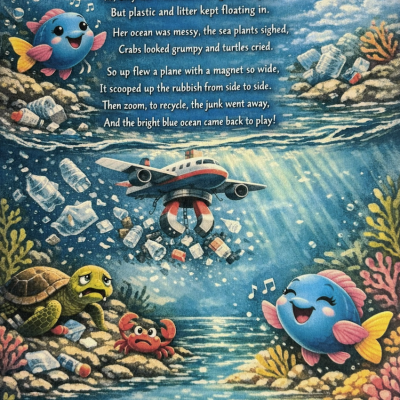
As part of Science Week and World Environment Day Year 1 have all been looking at how to look after the environment, especially our Oceans. Did you know that 70% of our planet is actually made up of water, this means that there is more water than land on our planet! Our Oceans are homes to many animals and plants. Often pollution can get into our oceans such as our rubbish and this causes problems in the ocean because it harms the plants and animals and it makes the water dirty.
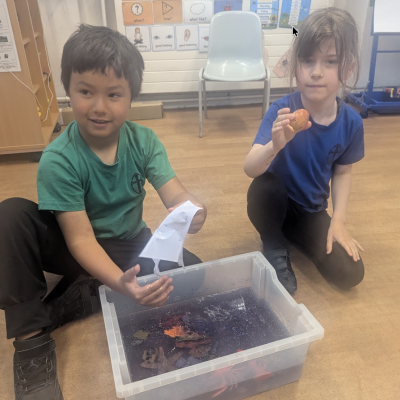
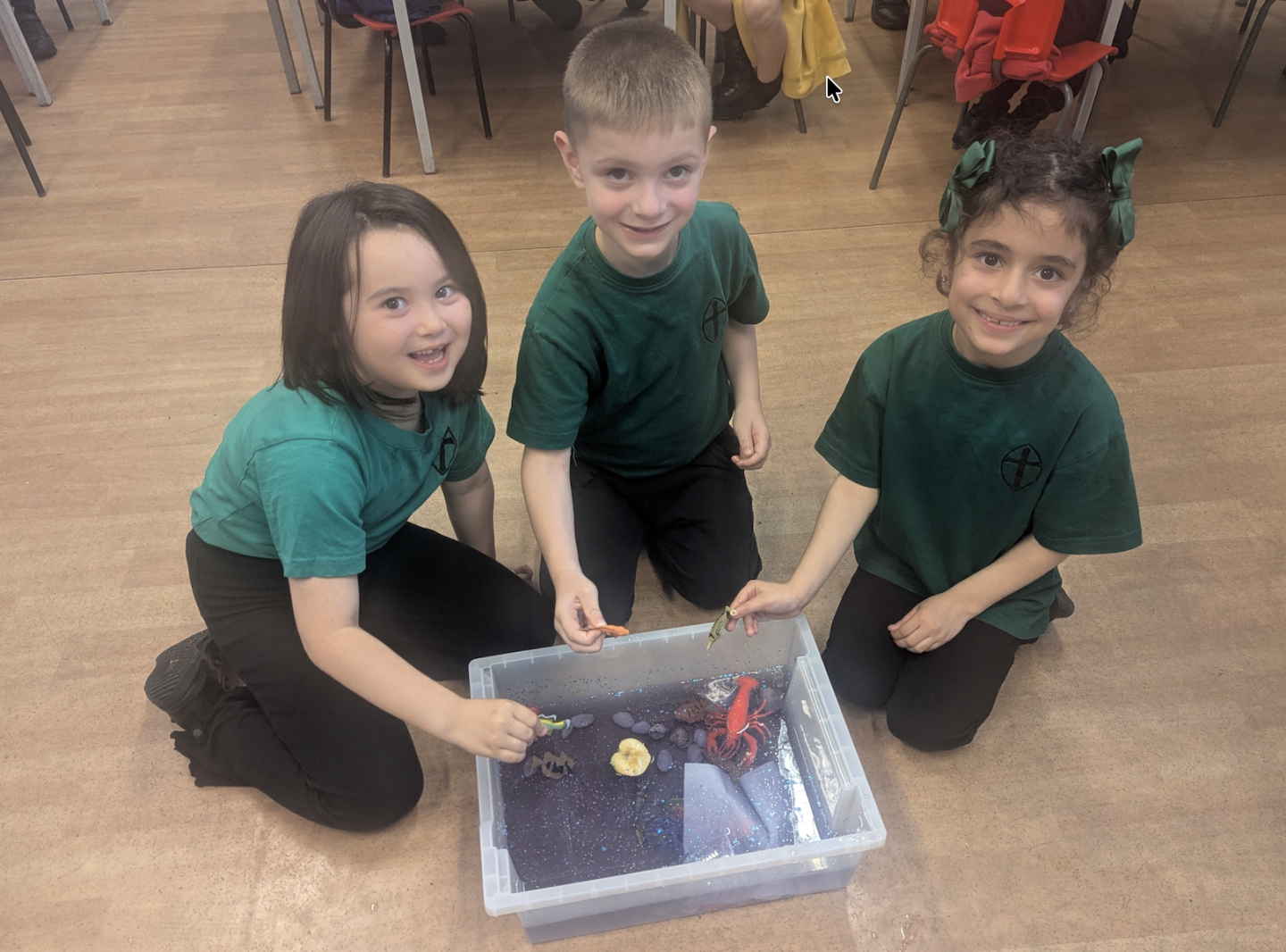
Year 1 looked at what happens to this rubbish that ends up in the ocean. They experimented by setting up an ocean tray with sea water, fishes, coral and shells. They then added 3 different materials to the tray, one man-made material (paper), one natural (piece of apple) and one plastic item (plastic cup). Children were then asked to predict which materials they think are biodegradable and which ones are not from these materials.
Leonardo said
“I think the paper will melt and break apart.”
Audrey said
“I think the apple will sink and get brown and rotten”.
Children made daily observations over the week. At the end of the week the children compared their predictions with their observations and shared their findings. They found that the apple had started to decompose which meant it is biodegradable, the paper had broken down into pieces, also meaning it is biodegradable but the plastic cup did not change at all. This showed the children that plastic does not break down meaning it is not biodegradable and therefore it is harmful to the environment, especially our oceans.
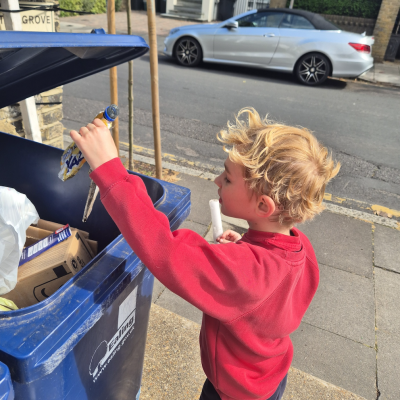
Children also brought in posters or photos were sent in for Show and Tell to share with the class what they do to help the environment. It was fabulous to see the discussion this created in the classrooms – well done Year 1!